


Lesson 1 – Biosphere
Introduction
What is the biosphere? This may seem like a simple question, but the answer is complex. The biosphere includes all ecosystems on Earth and the organisms that inhabit them. This has both the terrestrial and aquatic environment and the atmosphere. The biosphere is vital because it is home to all life on Earth. This article will explain what the biosphere is all about and why it matters.
I. Definition
1. What is a biosphere?
The biosphere, which includes the soil and atmosphere, is characterized as the area of the Earth inhabited by living organisms. The biosphere stretches from the most profound root systems of trees, through the dark perimeters of ocean trenches, to lush tropical forests and towering mountain peaks. The area where life exists on, above, and below the surface of the Earth is referred to as the biosphere.
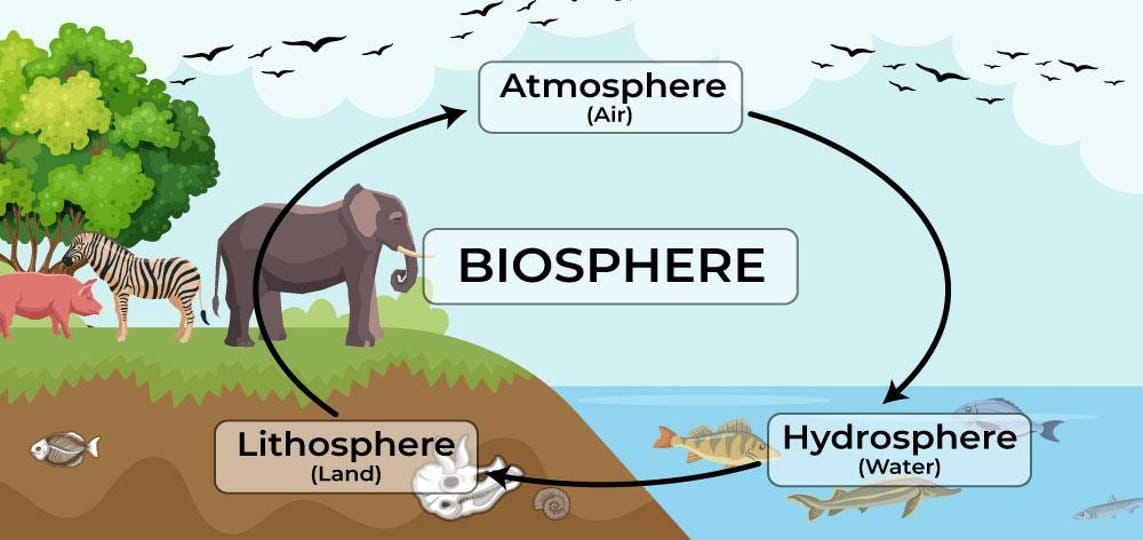
Definition of biosphere
As a result, it is essential for maintaining ecosystems, including species’ presence and their mutual interactions. And the biosphere is critical for climate regulation.
2. Biosphere examples
The Earth’s natural biosphere, referred to as the Biosphere, comprises various biomes like forests, ponds, reefs, and tundra. Interestingly, humans also constructed an artificial biosphere, also named Biosphere, located in Oracle, Arizona. This human-made biosphere was established between 1991 and 1994, with the primary aim of studying different environmental factors and conducting relevant research. Structurally resembling a large greenhouse, it accommodated groups of individuals who lived and worked within its confines. The initial purpose of this project was to investigate diverse ecological factors and gather pertinent information.
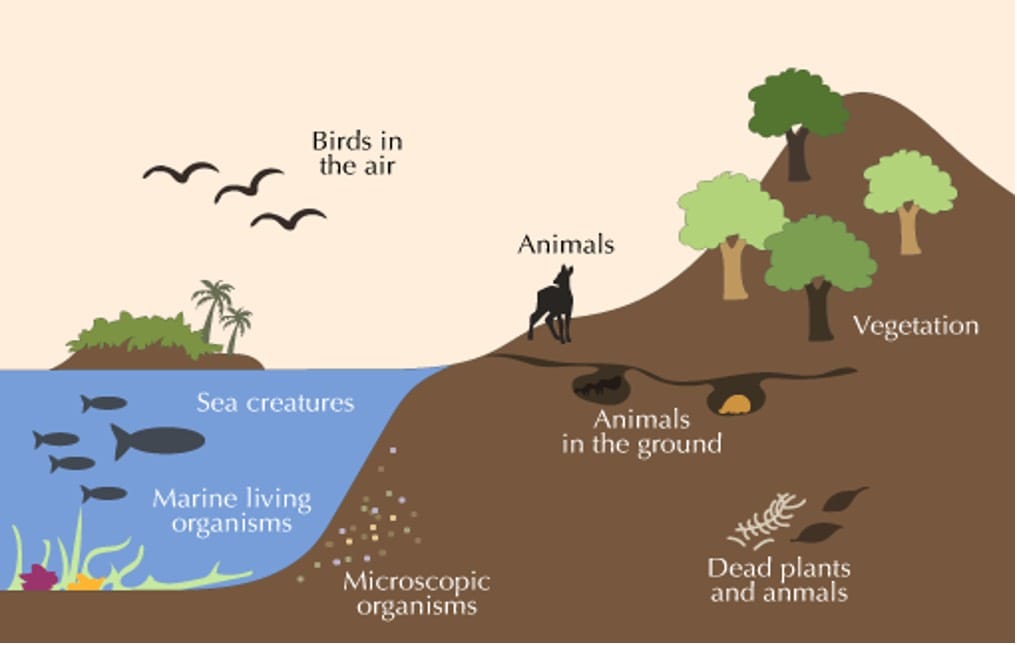
Examples of Biosphere
3. Importance of biosphere
The biosphere links living species’ healthy lives and their interactions. This interrelationship includes:
Foster life on Earth: All living species sustain life on the Earth’s surface by adapting to numerous environmental changes, favorable climatic circumstances, and the supply of energy as food.
Organic matter: The biosphere helps sustain life on Earth by recycling nutrients such as oxygen and nitrogen.
Supply food or raw material: Every living thing requires food to survive; consequently, the biosphere is critical in giving food to various animals and plants.
II. Biosphere explanations
1. Origin and Evolution of Biosphere
The biosphere and Earth’s ecology evolved between 3.8 and 3.5 billion years ago. Prokaryotes, the biosphere’s first life forms, existed without oxygen. Single-celled creatures such as bacteria and archaea were ancient prokaryotes.
Some prokaryotes developed a distinct chemical pathway. They used sunlight to create simple sugars and oxygen from water and carbon dioxide, known as photosynthesis. As a result, more species, ranging from single-celled algae to multicellular autotrophs like vascular plants, could consume the carbon dioxide in the atmosphere and eventually deliver oxygen to the atmosphere.
More extraordinary biodiversity resulted from higher oxygen levels in the atmosphere, allowing the biosphere to host more complex life forms to evolve. This results in a “healthy” biosphere teeming with various species, allowing them to fill multiple ecological niches.
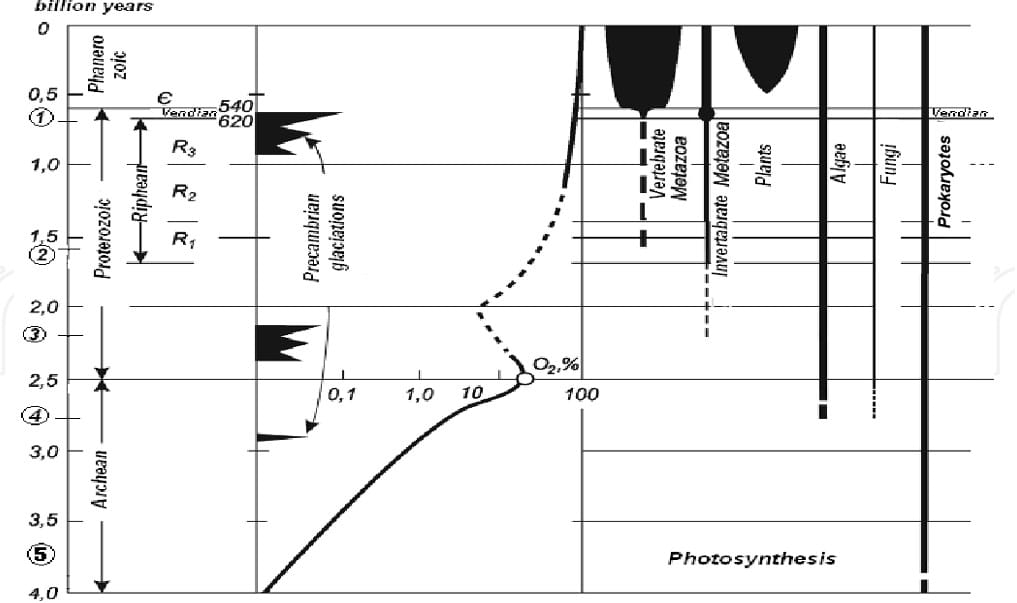
Evolution of Biosphere
Autotrophs, or creatures capable of photosynthesis, produce the food chain, while heterotrophs serve as natural biological regulators. Herbivores are heterotrophs that only eat plants, carnivores are carnivores, and omnivores are omnivores. Decomposers are creatures that decompose dead organisms or decaying tissues, breaking down organic waste and transforming it into simpler compounds or substances that nourish the Earth. Fungi, for example, break down cells of dead plants and animals into simpler compounds.
2. Components of Biosphere
The biosphere includes two main components, namely:
2.1 Abiotic components
These include all the non-living elements of the biosphere. Though these are non-living elements, they are critical for the survival of all living organisms. Abiotic components include:
Lithosphere- Solid part of the Earth’s crust. The lower mantle and core of the planet do not support life and hence are not a part of the biosphere.
Atmosphere- Gaseous part of the Earth. It covers the Earth that contains carbon dioxide, oxygen, and other gases to help living organisms sustain life.
Hydrosphere- Liquid part of the Earth. Also known as the aquatic region. However, it does encompass solid forms such as glaciers. The hydrosphere, which supports life, is critical in maintaining the Earth’s temperature.
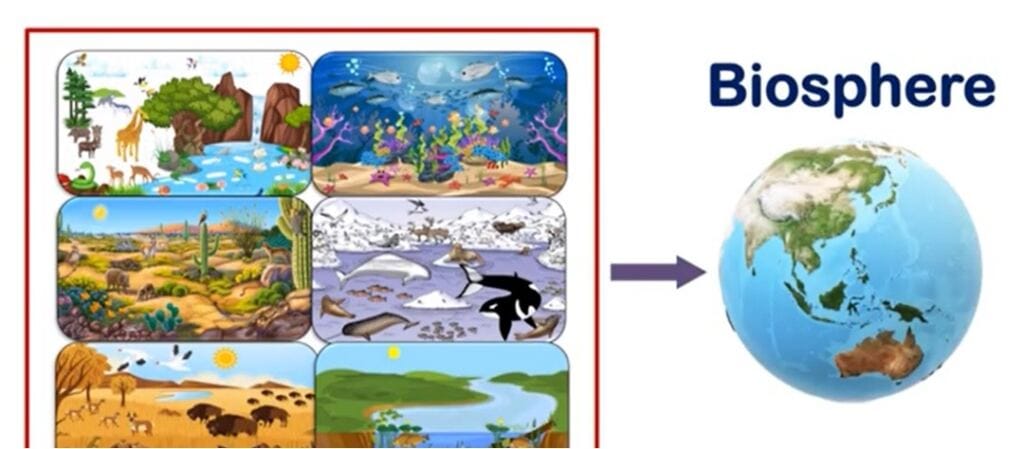
Biosphere Definition and Example I Biology
2.2 Biotic components
Plants – Plants are the primary producers and hence play a critical role. Autotrophs are organisms that make their nourishment through the process of photosynthesis. Plants also aid in the recycling of organic waste. As a result, they serve as a source of energy for all living organisms.
Animals – They are principal customers. They are called heterotrophs because they do not manufacture their food and must rely on other sources. Plant organic matter is used as food by animals. They convert food into energy, which they use for growth and development.
Microorganisms – They play an essential role in the ecology. Fungi, algae, bacteria, viruses, and other organisms are examples. Furthermore, they act as decomposers by decomposing garbage or dead materials. This degrading process serves as their food supply.
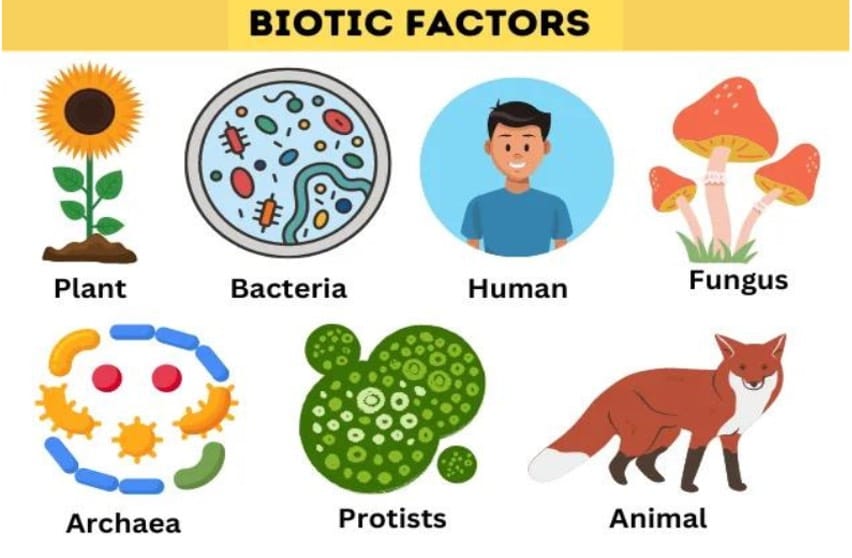
Biotic Factors
3. Organizational Structure of Biosphere
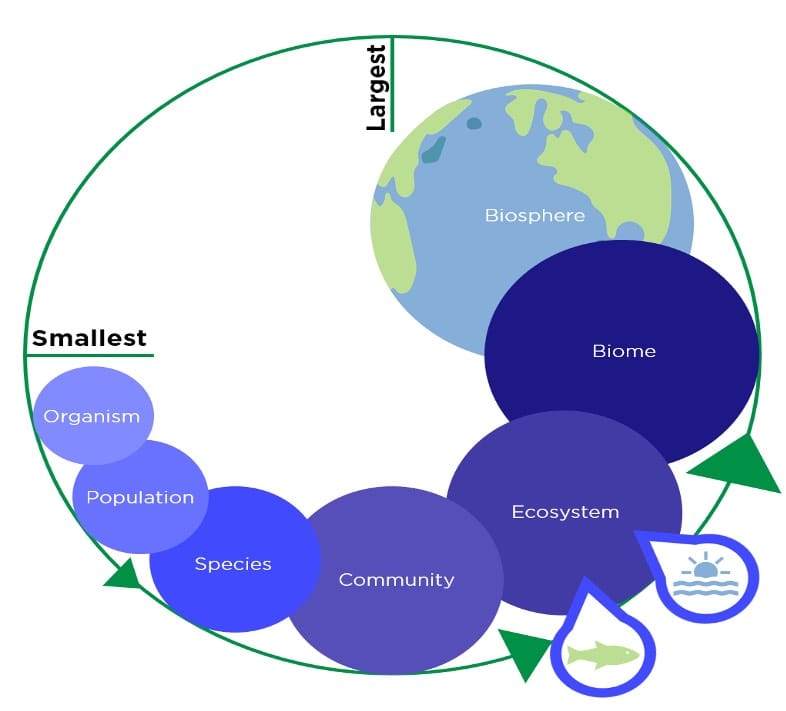
Structure of Biosphere
The biosphere is primarily defined by the reference to all life and living species on Earth. It has a five-tiered organizational structure:
3.1 Biomes
The biosphere is divided into five types: tundra, grassland, forests, deserts, and aquatic biomes. Various plants and animals inhabit rivers, lakes, seas, oceans, and other aqueous habitats. Desserts are the driest areas of the Earth with the lowest rainfall per year. Grasslands cover the green spaces of the Earth but experience moderate rain but not enough to grow large trees. Forests are areas dominated by large trees, while tundra is the treeless Arctic region where the subsoil is permanently frozen.
3.2 Ecosystem
The ecosystem comprises a biological community and the physical environment, which includes both biotic and abiotic factors. There are four types of ecosystems: terrestrial, freshwater, marine, and artificial. The terrestrial ecosystem is on land and is exemplified by grassland and forest ecosystems, the freshwater ecosystem is an aquatic ecosystem, the marine ecosystem is a saltwater ecosystem, and the artificial ecosystem is an artificial system.
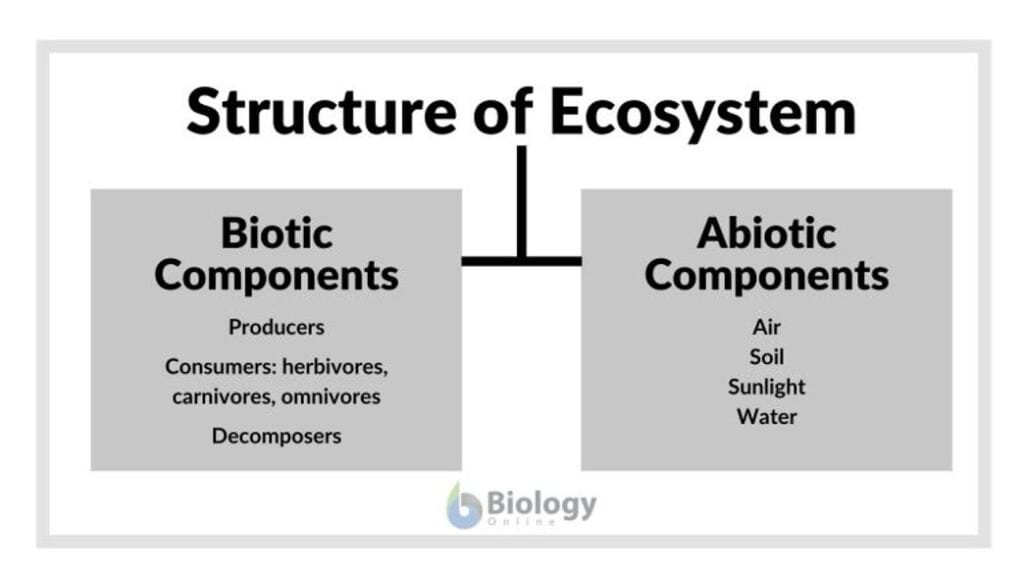
Structure of ecosystem
3.3 The Community of Species
A biological community is a group of interacting organisms (of the same or different species) that coexist in a specific location and time. It is the collection of interacting organisms (of the same or different species) in a specific location and time.
3.4 Population
Overpopulation occurs when a species’ population exceeds the carrying capacity of an ecological niche. Overpopulation can lead to a struggle for survival, with species competing for limited resources. Natural selection and symbiotic interactions occur, with species with favorable characteristics being selected to flourish and reproduce over those with less desirable characteristics.
3.5 Organisms
Organisms are the biosphere’s living creatures, with cellular organization and systems that enable various life processes. They can be eukaryotes or prokaryotes, and their presence of an endomembrane system and internal compartmentalization that leads to the production of distinct organelles distinguishes them. Eukaryotes possess specific characteristics, but prokaryotes do not.
Conclusion
In conclusion, the biosphere is a complex and vital concept. It is essential to our understanding of the natural world and our place in it. The biosphere is a dynamic and ever-changing environment that sustains all life on Earth. It is an important part of our planet’s ecosystems and provides the conditions for life to thrive. The biosphere is an essential concept for us to understand and protect.