


Lesson 9 – Solar Eclipse
Introduction
A solar eclipse occurs when the moon passes directly between the sun and the Earth, leading to the sun being partially or completely obscured from view. This rare and awe-inspiring phenomenon results from the precise alignment of the sun, moon, and Earth, casting a shadow over certain areas of the planet. During a solar eclipse, the moon’s shadow can transform daylight into twilight, creating an extraordinary and mesmerizing spectacle. The intricacies of this celestial event highlight the delicate balance and predictable patterns of our solar system, captivating observers and astronomers alike with its dramatic display of cosmic alignment.
I. Definition
A solar eclipse is an intriguing event in the sky that happens when the Moon moves between the Sun and the Earth, causing the Sun to be partially or completely hidden. This happens because, from our viewpoint on Earth, the Moon appears to be the same size as the Sun, allowing it to completely block the Sun during a total solar eclipse. Although solar eclipses are not uncommon, they can only be observed from specific locations on Earth where the alignment of the Sun, Moon, and Earth is just right.
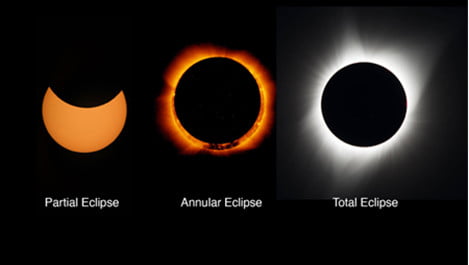
A solar eclipse usually starts when the Moon partially covers the Sun, creating a crescent shape in the sky. This is called a partial eclipse. As the alignment continues, the Moon gradually moves across the Sun’s face, eventually completely blocking it. This is the moment of a total solar eclipse when the sky becomes dark and the stars become visible. Total solar eclipses are incredibly captivating events and are eagerly awaited by both astronomers and the general public. However, it is important to remember that it is never safe to look directly at the Sun, even during an eclipse, as it can cause serious damage to the eyes. To observe this amazing phenomenon, it is always necessary to use proper eye protection, such as solar eclipse glasses or specially designed filters.
II. What Causes a Solar Eclipse?
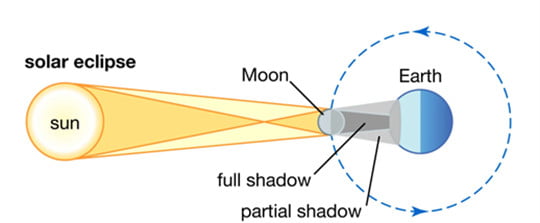
A solar eclipse occurs when the Moon passes between the Sun and the Earth, casting its shadow on our planet. This happens because the Moon’s orbit is slightly tilted compared to the Earth’s orbit around the Sun. When the Moon aligns perfectly with the Sun and Earth during its orbit around our planet, a solar eclipse occurs. However, solar eclipses are not a regular event as the alignment has to be precise.
During a solar eclipse, the Moon casts its shadow on Earth in two regions: the umbra and the penumbra. The umbra is the innermost and darkest part of the shadow, where the Sun is completely blocked out. In the umbra, observers on Earth experience a total solar eclipse, with a momentary darkness during the day. The penumbra is a less dark region surrounding the umbra. People in the penumbra path experience a partial solar eclipse, where only a portion of the Sun is obstructed. It is important to use protective eyewear when observing a solar eclipse, as looking directly at the Sun during an eclipse can cause severe eye damage.
In summary, solar eclipses are captivating events that occur when the Moon’s orbit aligns with the Sun and Earth in a precise way. The tilt of the Moon’s orbit and the alignment of the celestial bodies are the primary causes of this phenomenon. It is important to remember to take proper safety measures to protect our eyes when observing a solar eclipse. Solar eclipses remind us of the remarkable harmony and interaction among celestial objects in our vast universe.
Conclusion
In conclusion, the lesson on solar eclipses has offered a thorough and insightful exploration of this captivating astronomical phenomenon. We have gained a comprehensive understanding of the intricate mechanics behind solar eclipses, delving into the precise alignment of the Earth, Moon, and Sun that creates this awe-inspiring event. This knowledge not only deepens our appreciation for the celestial dance that unfolds in our skies but also enhances our broader understanding of the complex relationships within our solar system.