


Lesson 5 – The Importance of Context in Communication
Introduction
For thousands of years, organisms on Earth have relied on communication for survival and as a tool for biological evolution. However, what does this process entail and how is it affected by different contexts? In this discussion, I will analyze the factors that are necessary for successful communication. I will also explore the role of context and its impact on communication in social, physical, and cultural settings. Finally, I will conclude with my opinion on this process of assimilation.
I. What is Communication?
Communication is the act of two people engaging in a physical or verbal exchange to achieve mutual understanding. It involves the exchange of information, news, ideas, and feelings about various topics, as well as the sharing of goals and values. Communication also serves as a means of connecting people and places. The speaker consciously selects and delivers information in the hope that it will be correctly interpreted by the receiver.
II. What is Context?
Context refers to the circumstances and environment in which communication takes place. It includes the social, physical, and cultural factors that influence the communication process. These factors can shape the way information is exchanged and interpreted. Understanding the context is crucial for effective communication, as it helps ensure that messages are conveyed accurately and understood correctly by the receiver.
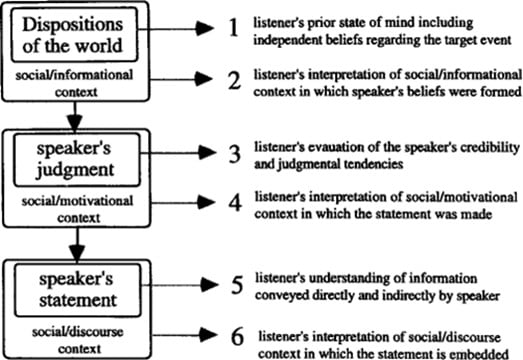
1. Physical context
The physical context refers to the overall environmental conditions in which communication takes place. This can include various settings such as classrooms, public parks, offices, and restaurants. The physical context involves considering how specific locations, as well as factors like temperature and weather, influence the communication process. To be an effective communicator, it is important to understand what types of statements are appropriate in different ecological conditions. The physical context helps individuals determine which messages are suitable for different environments. For example, if someone were to have a job interview in a park for a business position, this would impact the exchange of information and the perceived seriousness of the position.
2. Social Context

The social context refers to the overall environment and circumstances in which interpersonal and individual behavior occur. It also involves the nature of an individual’s relationships with others. One important aspect of the social context is the status relationships between people, which can influence how they communicate. Additionally, roles, societal norms, cultural values, and customs all impact how people interact with each other, known as the social context. This theory is used to understand societal structures and socialization within a given living environment.
An example of how social context can affect meaning in the workplace is when an individual flirts with their employer. This goes against the shared meaning within a working environment and is considered irregular.
3. Cultural Context
The cultural context plays a significant role in communication between people. Culture refers to the values, attitudes, beliefs, and perspectives that shape our core principles. These characteristics not only influence our thoughts but also our worldview. Culture affects our communication habits and personal preferences, including desires, needs, and wants. Miscommunication often occurs due to the all-encompassing nature of culture in both work and social environments. For instance, in Western African countries, there are restrictions on how women can express themselves in public, which can impact various aspects of their work, such as speaking loudly in a professional kitchen.
Conclusion
In conclusion, context is crucial in communication. Without understanding the circumstances, environment, and background information surrounding a conversation, misinterpretation, and misunderstandings are likely to occur. Context provides important cues for accurately interpreting meanings and intentions. Whether in personal relationships or professional settings, accurate communication is essential for effective collaborations, trust-building, and mutual understanding.