The manner in which we communicate a message significantly influences how it is perceived and interpreted by the audience. The choice of communication channels, encompassing the various methods and tools utilized to convey information, plays a pivotal role in this process. Selecting the appropriate channel—whether it be face-to-face conversation, email, social media, or other mediums—can enhance the clarity, effectiveness, and reception of the message. Each channel has its unique characteristics and advantages, and understanding these nuances allows us to tailor our communication strategy to better align with the preferences and expectations of our audience. Consequently, the thoughtful selection and use of communication channels can greatly enhance the overall impact and success of our message delivery.

Communication channels refer to the various ways in which people interact and communicate with each other in an organization, workplace, or everyday life. Without the appropriate communication channels in place, it is extremely difficult to align workers with company objectives, break down barriers between departments, and foster creativity in the workplace.
The choice of communication channel is crucial when it comes to business meetings. Whether you are sharing new information with the entire company or discussing a project with a single colleague, the type of communication channel you choose will greatly impact the outcome.
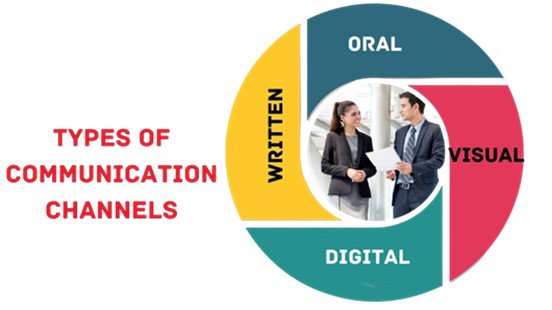
Are the most formal but also the slowest form of communication. They are commonly used for contracts, notifications, and other company-wide papers that require a formal tone or signature. Examples of written communication include memos, emails, letters, and reports.
Are the quickest but least formal form of communication. They are often used for brainstorming sessions, small talk, and impromptu meetings. Since oral communication is difficult to document, it is often combined with another form of communication like email or instant messaging. Examples of oral communication include telephone calls, video conferencing, and in-person meetings.
Are a combination of formal and informal channels. Visuals are effective in conveying information quickly, making them ideal for presentations, infographics, and other business communications. Examples of visual communication include PowerPoint presentations, videos, infographics, and images.
Are the quickest and most informal form of communication. They are often used for small talk, brainstorming sessions, and impromptu meetings. Like oral communication, digital communication is often used alongside another form of communication for documentation purposes. Examples of digital communication include instant messaging, chat rooms, social media, and webinars.
Communication channels are the various methods used to communicate, including phone calls, text messages, emails, and face-to-face conversations. These channels can be classified based on their purpose, such as informing, requesting, giving feedback, or building relationships.
There was a problem reporting this post.
Please confirm you want to block this member.
You will no longer be able to:
Please note: This action will also remove this member from your connections and send a report to the site admin. Please allow a few minutes for this process to complete.
Sign up for our fortnightly newsletter with the best travel inspirations.