


Lesson 1 – Interpersonal Communication
Introduction
Interpersonal communication transcends the mere act of exchanging messages; it is fundamentally about the creation and sharing of meaning between individuals. Unlike simple message transmission, effective interpersonal communication involves understanding, interpreting, and responding to the deeper significance behind the words and gestures. The linear model of communication, which emphasizes the centrality of “the message,” posits that clear and unambiguous communication is achievable. This model suggests that through a well-structured and articulated process, one can convey thoughts and intentions with precision and clarity, ensuring that the essence of what is communicated is accurately understood by the recipient. In essence, while the linear model highlights the importance of message clarity, true interpersonal communication also involves the intricate dance of mutual comprehension and meaning-making.
I. Definition
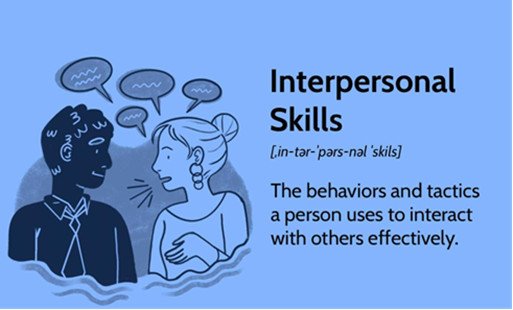
Interpersonal communication refers to the process of exchanging information, ideas, and emotions between two or more individuals using verbal or non-verbal methods. This can involve face-to-face interactions where information is conveyed through speech, facial expressions, body language, and gestures. The effectiveness of one’s interpersonal communication skills is determined by how well they can convey messages to others.
Within an organization, interpersonal communication is commonly used in various situations such as daily internal employee communication, client meetings, employee performance reviews, and project discussions. Additionally, a significant portion of interpersonal communication in the workplace now takes place online through conversations conducted via digital platforms.
II. Characteristics

Interpersonal communication is a form of communication that occurs between individuals in various settings such as friendships, work environments, romantic relationships, leadership roles, and families. Unlike mass communication, which involves delayed or technology-mediated feedback, interpersonal communication allows for spontaneous feedback, especially in face-to-face interactions.
Interpersonal communication utilizes multiple channels, including verbal and non-verbal modes of communication. It incorporates the five senses of sound, sight, smell, taste, and touch to send and receive messages.
While interpersonal communication is distinct, it also plays a significant role in other forms of communication such as mass communication, traditional communication, and group communication. Research has shown that interpersonal communication mediates the effects of media, and there are also friendship networks within groups.
Unlike mass communication, interpersonal communication does not require a complex bureaucratic setup or sophisticated gadgets for information exchange. It is a cost-effective form of communication.
Furthermore, effective listening is crucial in interpersonal communication. Poor listening habits can hinder successful communication.
Interpersonal communication is centered around the creation and exchange of meaning. It emphasizes the importance of the message being accurately and unambiguously communicated.
Additionally, interpersonal communication is an ongoing process rather than a single event or series of events. It is not limited to a specific timeframe and should not be viewed as such.
Interpersonal communication is cumulative over time. The interpretation of a message today is influenced by past interactions and expectations based on previous conversations.
To fully understand communication between individuals who have a history of communication, it is essential to consider the context of their relationship, as it can impact how they interpret each other’s remarks in the present moment.
III. Types
1. Verbal communication
refers to speaking and encompasses the words used, persuasive speaking techniques, language choice, emphasis on certain words, and even the use of affirmative sounds and short phrases like “Yup” or “Uh-huh.”
2. Listening is
arguably the most crucial interpersonal communication skill. It involves attentive listening, whether in-person or through other means like the Internet. Listening also includes techniques such as reflection and clarification. The best listeners are those who can focus their attention on the speaker, making them feel like the most important person in the room.
3. The Written Word
has become increasingly important in the Internet age and situations like the pandemic that require isolation. Whether on social media, in the workplace, or through texting, it is essential to know how to effectively convey your message in writing. This type of communication includes elements like emojis, grammar, clarity, tone, and punctuation. After all, there is a significant difference between “Let’s eat, Grandma!” and “Let’s eat Grandma!”
4. Non-verbal communication
encompasses body language, facial expressions, tone of voice, and gestures. The listener must pick up on and correctly interpret these non-verbal cues.
Conclusion
Interpersonal communication within the workplace plays a pivotal role in fostering employee satisfaction, enhancing motivation, facilitating effective collaboration, and driving overall business success. When employees communicate effectively, they are more likely to feel understood and valued, leading to increased job satisfaction and a stronger sense of belonging. This positive atmosphere boosts motivation, as employees are encouraged to contribute their best efforts when they feel their voices are heard and appreciated. Moreover, robust interpersonal communication is the bedrock of successful collaboration; it ensures that team members can efficiently share ideas, resolve conflicts, and work together towards common goals. Ultimately, the ripple effects of strong interpersonal communication extend beyond individual and team performance, significantly contributing to the achievement of organizational objectives and the overall success of the business.