


Lesson 2 – Types of Information Systems
Introduction
Information systems exist at the interface of technology, people, and procedures inside an organisation. Any information system consists of three basic components. Technology encompasses hardware, software, data, and network communications. People are also an important component of information systems, including help desk personnel, programmers, the CIO, and other essential actors in the information systems department. Finally, a process is a set of actions taken to accomplish a goal. Processes and information systems should always be in line with the company’s aims.
I. Definition of Information Systems
An information system (IS) is a set of interconnected components that collect, process, store, and distribute information to support decision-making and control in an organization. These components include hardware, software, data, procedures, and people. The primary purpose of an information system is to provide the right information to the right people at the right time.
II. Components of Information Systems
- Software:The programs and applications that enable the hardware to perform specific tasks. This includes operating systems, database management systems, and business applications.
- Data:Raw facts and figures that are processed by the system. Data is organized and structured to provide meaningful information.
- Procedures:The set of instructions and guidelines that govern the use of information systems. Procedures ensure consistency and efficiency in information processing.
- People:The individuals who interact with the system, including users, IT professionals, and system administrators.
III. Types of Information Systems
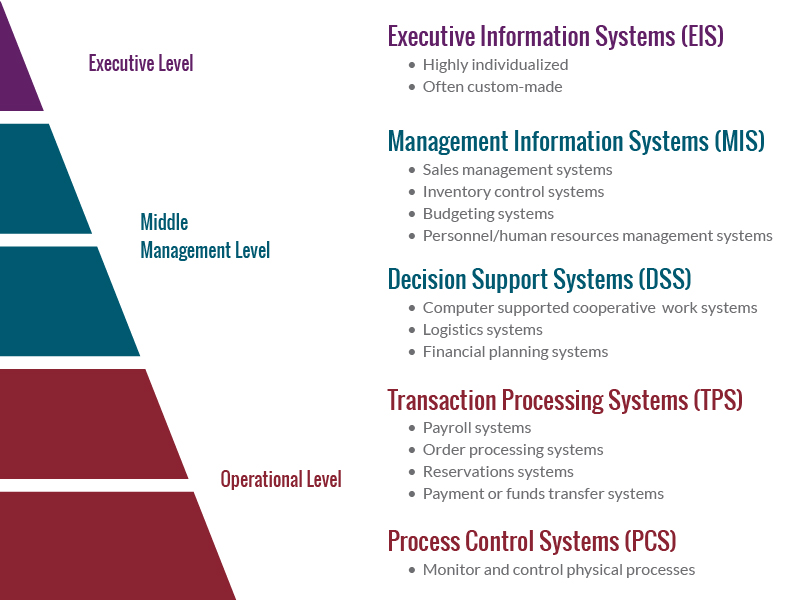
Information systems can be categorized based on their functionality and the level of an organization they serve. Here are the main types of information systems:
1. Transaction Processing System (TPS):
- Functionality:Captures and processes data generated during business transactions.
- Usage:Used for day-to-day operations such as order processing, inventory management, and payroll.
2. Management Information System (MIS):
- Functionality:Provides reports and summaries of operational data to middle-level managers.
- Usage:Assists in decision-making and planning at the managerial level.
3. Decision Support System (DSS):
- Functionality:Assists in decision-making by providing interactive information and analysis tools.
- Usage:Used by managers to analyze complex business scenarios and support strategic decisions.
4. Executive Support System (ESS):
- Functionality:Provides information to top-level executives for strategic decision-making.
- Usage:Supports the long-term goals and objectives of the organization.
5. Enterprise Resource Planning (ERP):
- Functionality:Integrates various business processes and functions across an organization.
- Usage:Enhances efficiency by streamlining processes and ensuring data consistency.
6. Knowledge Management System (KMS):
- Functionality:Captures, organizes, and applies organizational knowledge.
- Usage:Facilitates knowledge sharing and collaboration among employees.
7. Expert Systems:
- Functionality:Emulates the decision-making abilities of a human expert in a specific domain.
- Usage:Provides specialized knowledge and advice in areas such as medicine and engineering.
8. Intranet and Extranet Systems:
- Functionality:Internal networks for communication and collaboration within an organization (intranet) and between organizations (extranet).
- Usage:Facilitates information sharing and collaboration among employees and external partners.
IV. Relevant Information on Information Systems
1. Cybersecurity Challenges
As information systems become more interconnected, the threat of cyber attacks increases. Organizations must invest in robust cybersecurity measures to protect sensitive data and ensure the integrity of their systems.
2. Big Data and Analytics
The advent of big data has transformed how organizations leverage information systems. Advanced analytics tools are used to extract meaningful insights from vast amounts of data, aiding in better decision-making.
3. Cloud Computing
Cloud-based information systems offer scalability and flexibility. Many organizations are migrating to cloud platforms to reduce infrastructure costs and enhance accessibility.
4. Mobile Computing
With the proliferation of mobile devices, information systems are adapting to provide seamless access to data on smartphones and tablets. Mobile computing is changing the way people interact with information.
5. Artificial Intelligence (AI) Integration
AI is increasingly integrated into information systems to automate tasks, improve efficiency, and enhance decision-making processes. Machine learning algorithms analyze data and adapt over time, providing valuable insights.
Conclusion
In conclusion, understanding the various types of information systems is crucial for navigating the complex digital landscape. From transaction processing to strategic decision-making, information systems empower organizations to thrive in the digital age. As technology continues to advance, staying informed about the latest trends and innovations in information systems is essential for both individuals and businesses.