


Lesson 3 – Business Organization
Introduction
An organization’s aims are directed through specific actions, which are outlined in its organizational structure. Effective organizational structures specify the responsibilities of each worker and how they relate to the system as a whole.
I. What Is an Organizational Structure?

An organizational structure is a framework that specifies how particular tasks are carried out to meet the objectives of the organization. Roles, responsibilities, and norms may be a part of these activities.
The way information moves across tiers of the organization is also determined by its organizational structure. For instance, in a decentralized structure, decision-making authority is shared among the organization’s levels, but in a centralized structure, choices are made at the highest level. Establishing an organizational structure enables businesses to stay focused and productive.
1. Centralized vs. Decentralized
Numerous businesses adhere to the conventional paradigm of a centralized organizational structure. Every position has clear responsibilities and a transparent chain of command under centralized leadership.
On the other hand, teams may collaborate across groups and have greater autonomy in making decisions in a decentralized organizational structure. Companies can be flexible and adjust to shifting demands with the support of decentralized leadership.
2. Hierarchical vs. Circular
The pyramid-shaped organization chart that most people are accustomed to seeing is a hierarchical organizational structure. The pyramid has a single role at the top, and the roles and authority of each level in the chain of command decrease as it descends.
A circular organization chart, on the other hand, has the firm leadership in the middle circle and resembles concentric circles. Information travels out to the next ring of management as opposed to down to the next “level.”
3. Vertical vs. Flat
A vertical organizational chart has a distinct chain of command, with less power and responsibility for each layer below the top (or center, in the case of a circular structure) and a limited group of executives at the top. Organizational structures that are based on function, products, markets, or geography are vertical structures, as will be covered in more detail below.
An individual working in a flat organizational structure might have multiple supervisors, as well as cross-departmental responsibility and decision-making authority. An illustration of a flat structure is the matrix organizational structure that is discussed below.
II. Types

1. Functional/Role-Based Structure
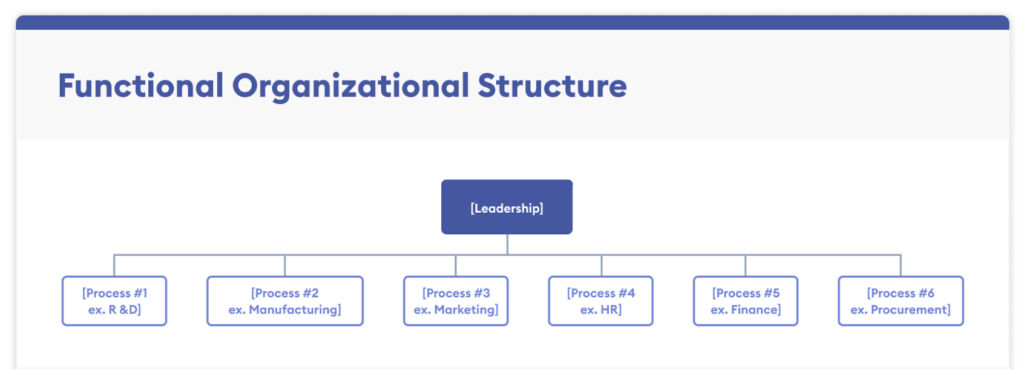
One of the most prevalent types of organizational structures is the functional, or role-based, structure. The vertical, hierarchical structure of this organization features centralized leadership and is characterized by well-defined roles, job duties, chains of command, and decision-making authority. Accountability, scalability, and specialization are made easier by a functional framework. It also has a well-defined chain of command and sets forth expectations. However, this structure might hinder staff development and be overly restrictive. It may also result in a lack of cooperation and communication among departments.
2. Product- or Market-Based Structure
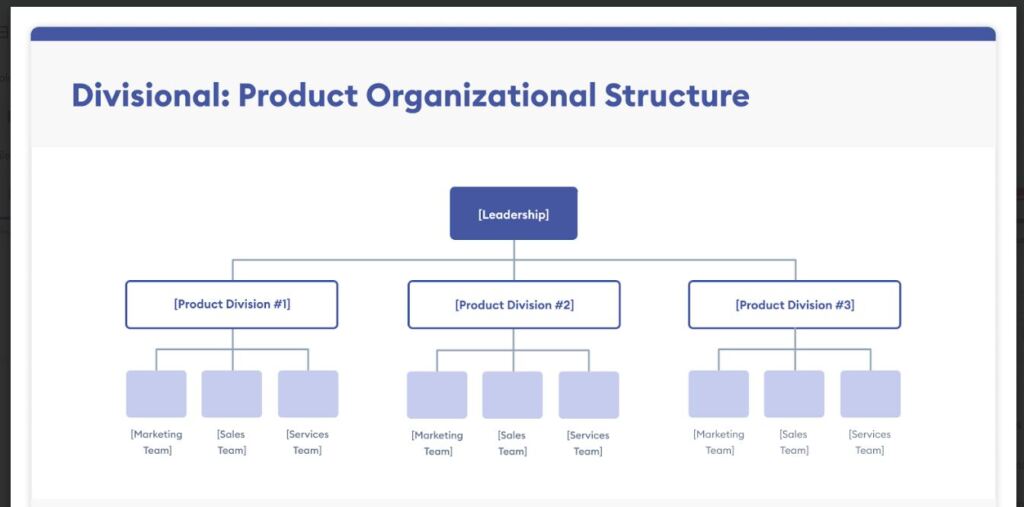
The product- or market-based structure is vertical, hierarchical, and centralized in addition to the functional structure. Nevertheless, it is organized around the company’s products or markets rather than customary roles and job activities. Companies with multiple product lines or markets can benefit from this type of structure, but scaling it up can be difficult. If product or market teams perform comparable tasks, it can also encourage inefficiency. Additionally, firms face the danger of incompatibility between different product/market teams if there is poor communication across teams.
So, while money has not yet changed hands, you have understood that it will. Because crediting income causes an imbalance in the calculation, you must debit accounts receivable.
In this case, the balance sheet might show an “Increase in Accounts Receivable (30000).”
3. Geographical Structure
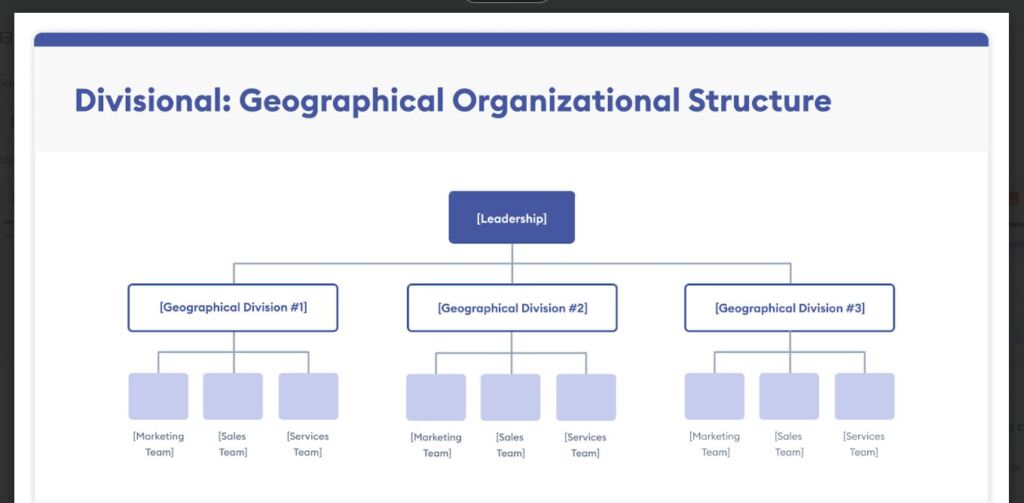
For businesses that operate across large geographic areas and operate in an industry where proximity to suppliers and customers is crucial, the geographical structure is a smart choice. The company’s ability to design custom organizational structures that complement the local language, professional systems, and culture is made possible by its geographic structure. It seems strikingly similar to the product-based structure above when seen in a wide sense.
4. Process-Based Structure
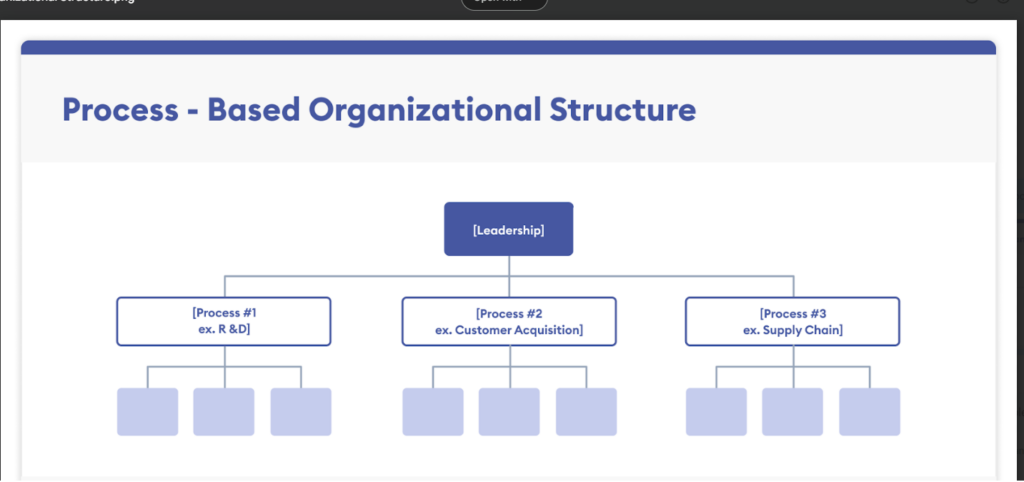
The process-based structure is organized to mirror the life cycle of a good or service, just as the functional structure. The structure, for example, can be divided into R&D, product development, order fulfillment, invoicing, and customer support. If communication isn’t given priority, this structure can promote specialization, efficiency, and teamwork but it can also lead to barriers between the teams.
III. Example
A decentralized organizational structure, which grants significant levels of autonomy to individuals and teams without requiring regular approval of business decisions by a core team, is an example of an organizational structure. Johnson & Johnson is an excellent illustration of this decentralized system. The corporation, which has thousands of goods and business segments, organizes itself so that every business unit has a president and runs as a separate entity.
IV. FAQs
1. What Are the Key Elements of an Organizational Structure?
Rules, roles, duties, and the information flow between levels of the organization are all important components of an organizational structure, as are how specific operations are directed to meet the objectives of the corporation.
2. What Is an Organizational Structure Chart?
Organizational structures are typically depicted as a pyramid-shaped chart or diagram, with the most powerful members of the company positioned at the top and the least powerful ones at the bottom.
3. Which Organizational Structure Is the Best?
There isn’t a single ideal organizational structure because it all depends on the kind of business and the sector it serves.
Conclusion
The best ways to optimize and structure organizations to be the most productive and successful are the subject of entire academic disciplines. When determining which kind of organization is appropriate for their company, senior leaders should take several things into account, such as the industry, company culture, and business goals.