


Lesson 3 – Metric System
Introduction
The metric system is the standard way to measure distance, height, volume, weight, and most other day-to-day items. For example, let’s consider a jar of milk. In most places worldwide, we utilize liters as a unit of measurement to quantify the volume of milk, while meters (or centimeters) are employed to determine the height of a jar. These metric units are part of the International System of Units (SI), which is widely adopted and recognized globally. Let’s learn more about the metric system.
I. Metric Units
Various metric units are employed for measuring Length, Weight (mass), and Capacity (volume).
1. Length
To determine the dimensions of an object, different units of measurement are employed, such as millimeters, decimeters, centimeters, meters, and kilometers. Examples encompass utilizing the thickness or length of a debit card, the length of fabric, or the distance between two cities.
2. Weight
We rely on the gram (g) and kilogram (kg) units to determine the heaviness of an object using instruments. They are commonly used to measure the Weight of fruits or our own body.
3. Capacity
The milliliter (ml) and liter (l) units are employed to quantify the volume of liquid an object can hold. For instance, they measure the amount of juice in a can or water in a tank.
Look at the table below to overview the metric system units utilized for various purposes.
| Purpose | Metric Units | Abbreviated |
|---|---|---|
|
Measurement of Length |
Millimeters |
mm |
|
Centimeters |
cm |
|
|
Meters |
m |
|
|
Kilometers |
km |
|
|
Mass/Weight Measurement |
Milligrams |
mg |
|
Centigrams |
cg |
|
|
Grams |
g |
|
|
Kilograms |
kg |
|
|
Tonne |
t |
|
|
Capacity Measurement |
Millimeters |
ml |
|
Centiliters |
cl |
|
|
Liters |
l |
|
|
Kiloliters |
kl |
II. Metric System Conversion
Metric system conversion refers to transforming one metric unit into another. For instance, if John measures the height of a pillar as 80 meters but wants to determine the value in kilometers, he can convert the measurement from meters to kilometers by using the suitable conversion formula.
The metric system employs the meter, liter, and gram as the fundamental units for Length (distance), Capacity (volume), and Weight (mass), respectively. To measure smaller or larger quantities, we utilize units derived from these base metric units. Below are some commonly used rhythmic system conversion formulas:
- To convert meters (m) to centimeters (cm), multiply by 100.
- To convert centimeters (cm) to millimeters (mm), multiply by 10.
- To convert kilometers (km) to meters (m), multiply by 1000.
- To convert kilograms (kg) to grams (g), multiply by 1000.
- To convert grams (g) to milligrams (mg), multiply by 1000.
- To convert liters (l) to kiloliters (kl), divide by 1000.
- To convert milliliters (ml) to liters (l), divide by 1000.
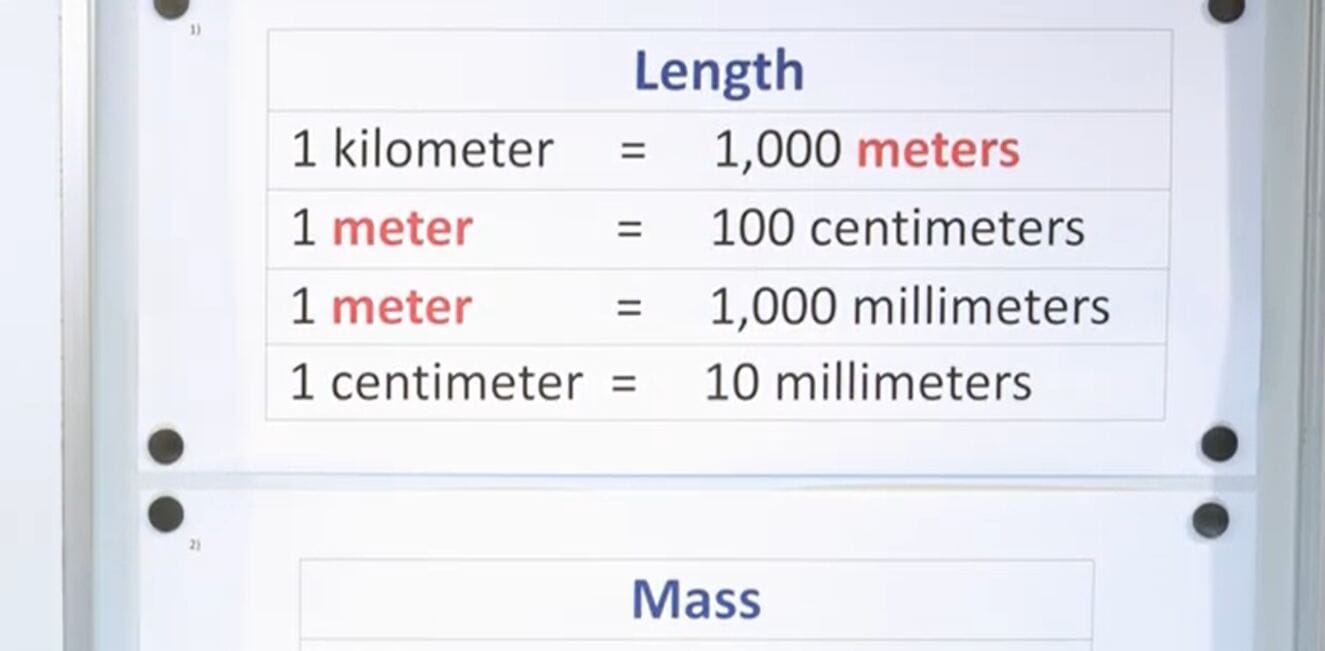
Metric System Conversion
We will now explore conversions in each area individually to gain a better understanding.
1. Length
However, the fundamental units for measuring Length within the metric system are millimeters, centimeters, meters, and kilometers. A ruler or measuring tape is commonly used to measure Length, with units expressed in centimeters.
Converting millimeters (mm) to centimeters (cm), you must divide the given value by 10. Similarly, to convert centimeters (cm) to meters (m), the given value is divided by 100. The process continues for larger units, such as converting meters to kilometers, by dividing the value by an appropriate power of 10. Conversely, when transitioning from smaller units to larger units, such as converting millimeters to centimeters or centimeters to meters, the value is divided by the corresponding power of 10.
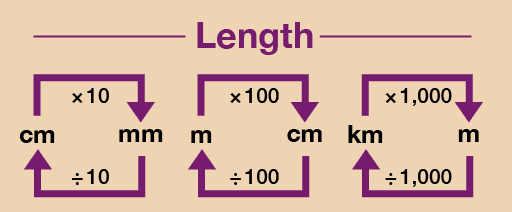
Metric Conversion of Length
2. Weight
The kilogram is the standardized unit for measuring Weight. The beam balance or weighing scale is commonly employed as the standard tool for weight measurement. Here are a few examples that illustrate typical weight measurements:
- Two bread slices typically weigh around 100 grams.
- A loaf of bread has an approximate weight of one kilogram (kg).
- An elephant weighs approximately 5 tons.
Please refer to the chart below, which showcases conversions of metric units of Weight.
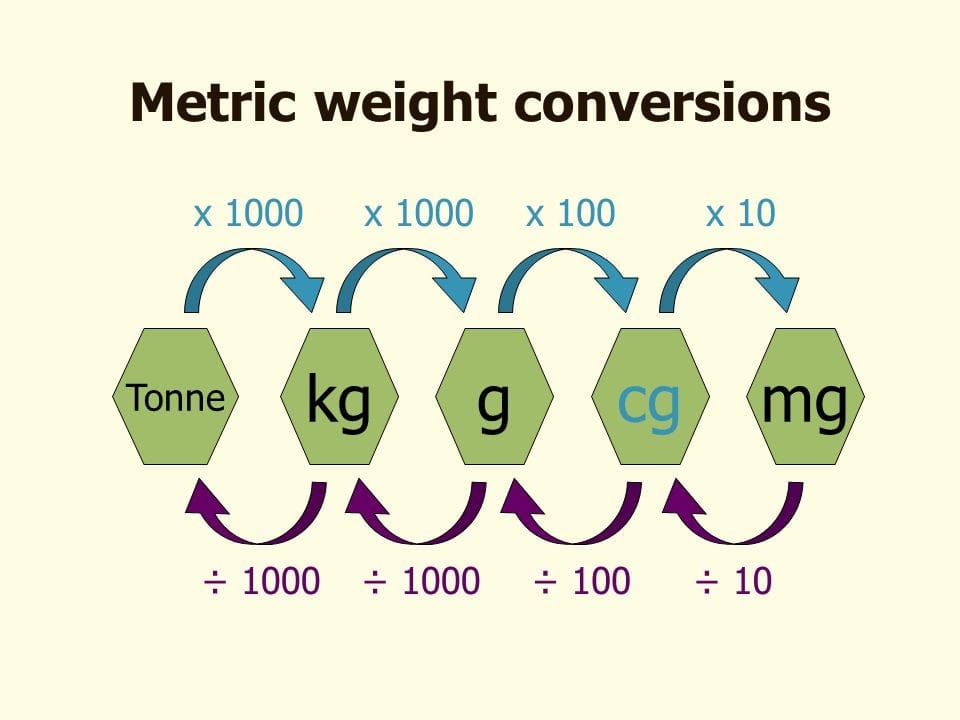
Metric Conversion of Weight
3. Capacity
Capacity refers to measuring volume or the amount of space an object occupies. The liter serves as the standard unit for measuring Capacity, and the measuring cup is commonly used as an everyday tool for this purpose. Here are a few examples:
- A liter of milk.
- 500 milliliters (ml) of oil.
- Two kilograms (kg) of crude oil.
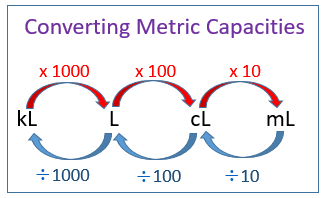
Metric Conversion of Capacity
Conclusion
In our daily lives, we frequently encounter the need to measure various quantities such as Weight, Length, and distance. The metric system is the standardized system employed for such measurements. The fundamental units of measurement within the metric system are the meter, liter, and gram, which correspond to Length, Volume, and Weight, respectively. In this article, we provided a comprehensive explanation of the metric system, accompanied by a conversing metric system.