

Lesson 5 – Nonfictions
Introduction
- Develop research and writing skills, boost critical thinking and analytical skills, and gain a deeper understanding of real-world events, issues, and diverse perspectives. Broaden their knowledge across various subjects.
- Learn how to evaluate the credibility of sources and distinguish between different types of nonfiction, such as biographies, memoirs, and Leadership & Self-help
I. Definition
II. Features of non-fiction texts:
- Based on knowledge, facts, and true events.
- Delivers factual and trustworthy information.
- Written with clarity and objectivity.
- Includes a wide range of topics, such as self-help, history, science, and biographies.
- Includes citations and references to back up statements and offer proof.
- To aid understanding, it could include images, pictures, charts, or graphs.
- Frequently written by professionals or others with in-depth understanding about the relevant field.
- Can be of an instructive, convincing, or narrative nature.
- Intended to inform, educate, amuse, or bring attention to a specific topic.
- For insights from real-world situations, it might also incorporate interviews, case studies, or firsthand recollections.
III. Literary nonfiction
1. Definition
2. Example
IV. Types of Nonfiction
- Biography, Autobiography, and Memoir
- Leadership & Self-help
- Science and Nature
- Nonfiction Novels
1
Biography, Autobiography, and Memoir
Biography, Autobiography, and Memoir tell the critical stories of a person's life, whether they're a well-known public figure or someone with an exciting story that inspires us all.
For example:
Biography:
- "Steve Jobs" by Walter Isaacson
- "The Diary of a Young Girl" by Anne Frank
- "The Wright Brothers" by David McCullough
- "Gandhi: An Autobiography - The Story of My Experiments with Truth" by Mahatma Gandhi
- "The Immortal Life of Henrietta Lacks" by Rebecca Skloot
Autobiography:
- "The Autobiography of Malcolm X" by Malcolm X and Alex Haley
- "Bossypants" by Tina Fey
- "Long Walk to Freedom" by Nelson Mandela
- "I Know Why the Caged Bird Sings" by Maya Angelou
- "Born a Crime" by Trevor Noah
Memoir:
- "Educated" by Tara Westover
- "Wild: From Lost to Found on the Pacific Crest Trail" by Cheryl Strayed
- "The Glass Castle" by Jeannette Walls
- "Eat, Pray, Love" by Elizabeth Gilbert
- "Hillbilly Elegy: A Memoir of a Family and Culture in Crisis" by J.D. Vance
2
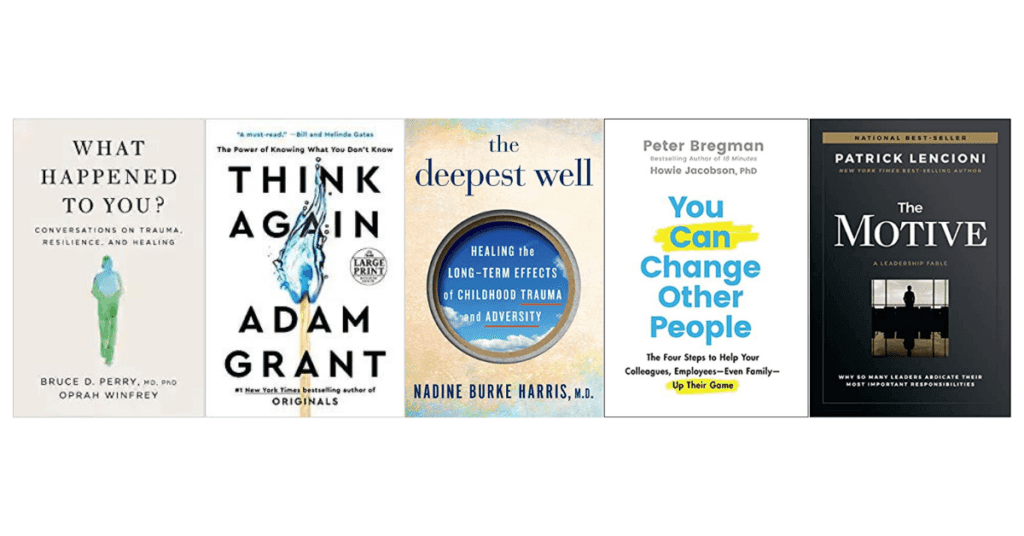
Leadership & Self-help
This kind of Nonfiction is part of a long tradition that provides instructions for raising and becoming your best self.
The following are some advantages of leadership and self-improvement books:
- Guidance and discovery: Offers the information and abilities required for leadership growth and personal development.
- Self-access and personal development: Assist readers in learning more about themselves, their objectives, and their aspirations.
- Help readers identify and develop their potential for success and growth by using the phrase "discover and drive potential."
- Relationship development and communication: Offers strategies and techniques for connecting with people and having productive conversations.
- Principles and strategies for effective leadership and organizational growth are provided.
Some famous authors in this field include:
- Dale Carnegie - Author of the book "How to Win Friends and Influence People."
- Simon Sinek - Author of the books "Start With Why" and "Leaders Eat Last."
- Stephen R. Covey - Author of the book "The 7 Habits of Highly Effective People."
- Brené Brown - Author of the books "Daring Greatly" and "The Gifts of Imperfection."
- Malcolm Gladwell - Author of the books "Outliers" and "The Tipping Point."
Some famous books of this genre can be mentioned as:
Leadership:
- "The 7 Habits of Highly Effective People" by Stephen R. Covey
- "Dare to Lead" by Brené Brown
- "Leaders Eat Last" by Simon Sinek
- "Good to Great" by Jim Collins
- "Start with Why" by Simon Sinek
Self-Help:
- "The Power of Now" by Eckhart Tolle
- "Atomic Habits" by James Clear
- "The Subtle Art of Not Giving a F*ck" by Mark Manson
- "The Four Agreements" by Don Miguel Ruiz
- "Mindset: The New Psychology of Success" by Carol S. Dweck
3
Science and Nature
Science and Nature make complex concepts and ideas more comprehensible, and it collects knowledge gained from the natural world.
For example:
- "Sapiens: A Brief History of Humankind" by Yuval Noah Harari
- "The Hidden Life of Trees" by Peter Wohlleben
- "The Gene: An Intimate History" by Siddhartha Mukherjee
- "The Immortal Life of Henrietta Lacks" by Rebecca Skloot
- "The Sixth Extinction: An Unnatural History" by Elizabeth Kolbert
4
Nonfiction Novels
Nonfiction novels focus on factual and real-life events, people, and locations and narrate a story through characters and their encounters. It combines features of fiction and Nonfiction to present a true story excitingly.
For example:
- "In Cold Blood" by Truman Capote
- "The Devil in the White City" by Erik Larson
- "Into the Wild" by Jon Krakauer
- "The Immortal Life of Henrietta Lacks" by Rebecca Skloot
- "Wild Swans: Three Daughters of China" by Jung Chang