


Lesson 5 – Scientific Tools
Introduction
The development and usage of this tool throughout history demonstrates that science is not simply a theoretical endeavor but also an activity based on a variety of tools and procedures that practitioners ingrain in a social setting within a society
A scientific instrument can be defined differently depending on usage, legal requirements, and historical context. Older tools from ancient to medieval times (such as the astrolabe and grandfather clock) defy a more modern definition of “a tool designed to study nature qualitatively or quantitatively.” These tools were previously called “natural philosophical” or “philosophical” apparatus and instruments.
Instrument producers close to a center of learning or study, such as a university or research facility, produce scientific instruments. When there was enough demand, a tool would be made as a commercial good after being designed, constructed, and refined for a particular function.
I. Definition
Scientific instruments are objects or implements used in investigation, experimentation, or observation in the field of science. They are made to gauge, examine, or alter various facets of the natural world. Questions about scientific instruments and their applications are frequently asked in SSC exams. As a result, it’s critical to have a fundamental understanding of the many kinds of scientific instruments and how they’re used.
II. Some science instruments and their uses:
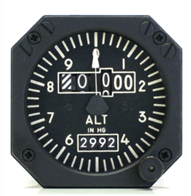
1. Altimeter
It also goes by the name altitude meter. It calculates an object’s height or separation from a fixed level, such as the earth’s surface, the surface of water, etc. It can, for instance, determine an aircraft’s altitude from the earth’s surface or the sea’s surface.
There are two types of altimeters:
Pressure altimeter or aneroid barometer:
By calculating the air pressure of the object, which may be an airplane, a hot air balloon, or any other object flying in the sky, a pressure altimeter, also known as an aneroid barometer, determines the location’s altitude or distance above a fixed surface. It operates on the premise that air pressure tends to drop as altitude rises. Therefore, the higher the object’s size, the lower the pressure. Paul Kollsman, a German engineer, created the pressure altimeter in the 1920s.
Radio altimeter:
Radio waves are used to transmit signals via a radio altimeter, which measures the height above the surface of the land or ocean. For instance, it sends radio waves from an item in the air to the ground, then measures the time it takes for the radio waves to return there. The altitude will increase as the amount of time increases. Lloyd Espenschied created the first radio altimeter in 1924.
2. Ammeter
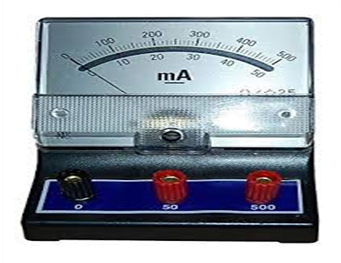
Electric current is measured with this apparatus in science. An electron flow that is measured in amperes is the electric current. Therefore, an ammeter or ampere meter is an instrument that measures current in amperes.
Types of Ammeters based on constructing principle:
- Permanent Magnet Moving Coil (PMMC) ammeter
- Moving Iron (MI) ammeter
- Electrodynamometer type ammeter
- Rectifier type ammeter
Based on the type of measurement we do, there are two types:
- DC ammeter
- AC ammeter
The coil of a permanent magnet moving coil (PMMC) ammeter is positioned halfway between the magnet’s poles. The ring begins to deflect as soon as the current is applied to it. The deflection increases with the amount of current flowing through the ring. Only direct current (DC) is measured.
Iron Ammeter (MI):
It can measure alternating and direct currents. A permanent magnet’s coil between the poles can move freely and deflect at an angle when electricity is carried through it. The quantity of current flowing through the coil directly relates to the defection.
Due to the magnetic field produced when current is delivered through the coil, it has an iron piece drawn to the ring when current is passed through it. The pointer moves around the scale due to the iron piece’s attraction, which produces a deflecting torque.
Electro-dynamometer ammeter:
It can measure both AC and DC. The fact that this ammeter has the same calibration for both AC and DC is its principal benefit.
Rectifier ammeter:
Only alternating current is measured by the rectifier ammeter. To measure the current, a rectifier, and a moving coil are used. It measures the A.C. to D.C. after rectifying it. The scale is set up to measure AC.
What enables an electron microscope to have such high resolution and magnification?
In contrast to a light microscope, which employs a beam of light to illuminate an object, an electron microscope uses an electron beam. An electron's wavelength is considerably smaller than electromagnetic radiation, light photons, and other types of light. The short wavelength makes a specimen appear more prominent in the image. In addition, an electron microscope uses electrostatic and electromagnetic lenses to focus the electron beam at a particular plane concerning the object. In a light microscope, glass lenses focus light on the thing to form an image.
3. Endoscope
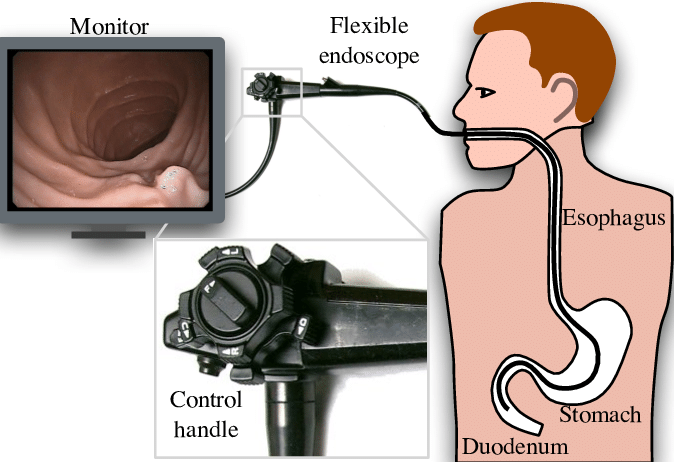
Without requiring surgery, this instrument is utilized to observe or inspect the inside organs of our body. It is a long, thin tube that can move around the inside of our body because it is flexible. It has a camera and a light that lets us view the interior of our bodies on television. It looks at organs like the stomach, esophagus, and throat.
It may be put into the body by the mouth, the anus, or a tiny skin incision made during keyhole surgery. In addition, a biopsy (the removal of tissue) is performed using an endoscope to assess the disease.
4. Fathometer
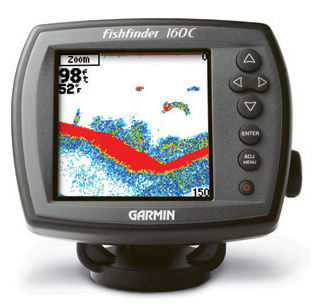
It is a scientific tool used to gauge the depth of water, such as the ocean. Ships mostly utilize it to determine the depth of the water beneath them. A fathometer is an echo-sounding device that determines the depth of water using sound waves. It sends sound waves to the ocean floor, then figures out how long it will take them to travel there and back to the source. A transmitting and receiving oscillator, recording unit, and power unit are the major parts of a fathometer. American engineer Herbert Grove Dorsey created the first usable fathometer.
5. Odometer
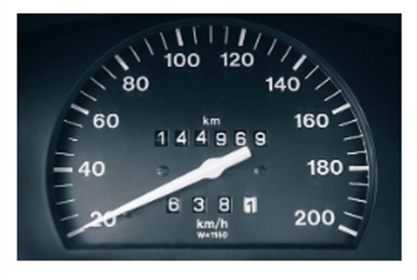
It is a piece of scientific equipment that shows how far a car, motorcycle, or vehicle has traveled. It could be a mechanical, electronic, or hybrid device, such as an electromechanical odometer. In most cars, the dashboard is where it may be found. Several cogs make up a mechanical odometer. Each cog represents a number. Along with the wheel’s rotation, the cogs also move. The distance traveled by the vehicle is indicated by a single row of numbers that changes as it moves forward. A computer chip is included in the modern electronic or digital odometer to measure the distance traveled. Digital readings are displayed. Benjamin Franklin constructed the first version of an odometer in 1775 to track the distance traveled by his carriage.
6. Other instruments in the lab
Thermometer:
During science experiments, a laboratory thermometer is used to determine the boiling and freezing points. It is also used to determine the temperature of certain substances. It can detect temperatures ranging from -10 to 110 degrees Celsius.
Hammer:
A hammer is a hand tool that consists of a weighted “head” attached to a long handle and swung to produce an impact to a small region of an item. This could be used to drive nails into wood, shape metal (as with a forge), or crush rock.
Scale:
Lab scales can be used in laboratories, production, quality control, and so on. The lab scales have numerous purposes such as recipe creation, piece counting, percent calculating, and so on. Many lab scales display different dimension units such as mg, g, and kg.
Pan:
Pans are used to transport, process, and store samples. They are made of stainless steel, steel, galvanized iron, aluminum, or glass and come in a variety of shapes.
Beaker:
A beaker is a flat-bottomed glass container used to hold liquids. The flat bottom allows the beaker to stand on its own and makes pouring liquid out easier. Beakers may also be used to measure liquids because they have measuring markings on them that allow you to see how much liquid is inside. If you’re working with big amounts of liquid, you can use a graduated cylinder instead, although graduated cylinders aren’t as handy for mixing or heating tiny amounts of liquid.
Ruler:
Most measures in science class are significantly less than a meter. In the scientific laboratory, the standard measuring device is a metric ruler. Each each line on a metric ruler represents a millimeter (mm). Centimeters (cm) are represented by the numbers on the ruler.
Hand lends:
A hand lens is a small magnifying device used by entomologists (or other naturalists) to magnify something they are looking at. A hand lens is made up of a lens made of glass or plastic. The lens is frequently linked to a swivel frame that allows the lens to move inside a protective cover.
Conclusion
Instrumentation reached new heights because of the requirement for better analysis of war items, including fuel, medicines, and chemicals suited for use as weapons. Today interfaces to computers and data management systems are increasingly required as scientific instruments, particularly analytical instruments, change quickly.