


Lesson 4 – Homeostasis
Introduction
Homeostasis is a fundamental concept in biology that refers to the ability of an organism or system to maintain a stable internal environment despite external changes. It plays a crucial role in ensuring the optimal functioning of living organisms, including humans. In this essay, we will explore the definition of homeostasis, its significance in the human body, and provide examples of its importance in maintaining overall health and well-being.
I. Definition of Homeostasis
1. Homeostasis Defined:
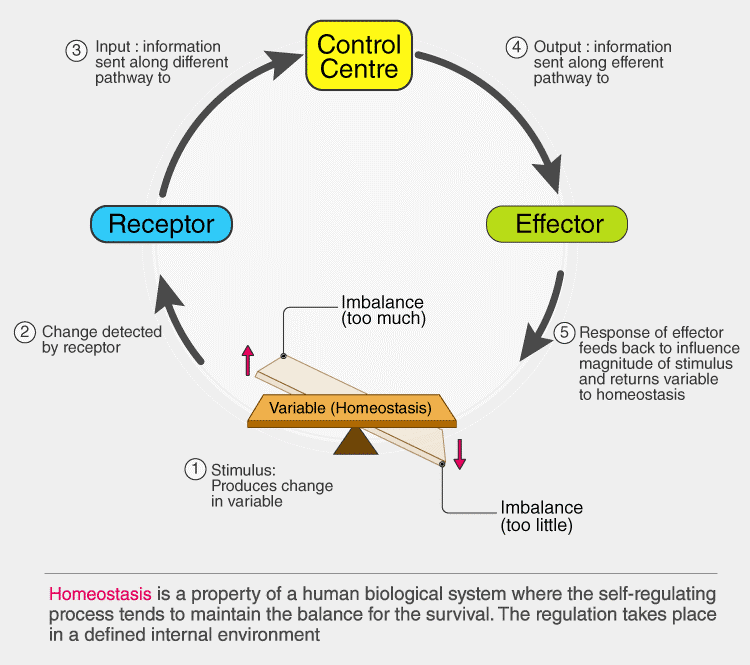
Homeostasis is the process by which living organisms maintain a relatively stable internal environment despite fluctuations in the external environment. It involves a complex series of physiological and biochemical mechanisms that work together to regulate various variables, such as body temperature, blood pH, blood sugar levels, and water balance. Homeostasis ensures that these internal conditions remain within a narrow range, allowing cells and organs to function optimally.
2. Key Components of Homeostasis:
Homeostasis relies on several key components:
Sensors:
Specialized cells or structures that detect changes in the internal or external environment.
Control center:
Typically, the brain or specific regulatory centers within organs that receive and process information from the sensors.
Effectors:
Organs, tissues, or cells that carry out the necessary responses to restore balance. These responses may involve initiating physiological or behavioral changes.
II. Homeostasis in the Human Body
1. Body Temperature Regulation:
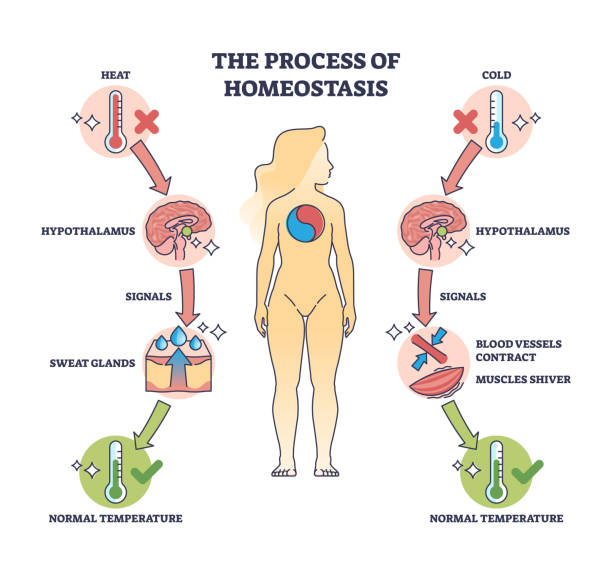
One of the vital aspects of homeostasis in the human body is the regulation of body temperature. The body maintains a relatively constant internal temperature of 98.6°F (37°C). When external temperatures rise or fall, sensors in the skin and brain detect the changes and send signals to the control center. In response, effectors such as sweat glands and blood vessels help regulate body temperature through processes like sweating, vasodilation, or vasoconstriction.
2. Blood Glucose Regulation:
Homeostasis is crucial in maintaining stable blood glucose levels. After consuming food, blood glucose levels increase. The pancreas senses this rise and releases insulin, which helps transport glucose from the blood into cells for energy utilization or storage. Conversely, when blood glucose levels drop, the pancreas releases glucagon, triggering the breakdown of glycogen into glucose and its release into the bloodstream. This intricate balance ensures that cells have a constant supply of energy while preventing excessively high or low glucose levels.
3. pH Balance:
Homeostasis is vital for maintaining the pH balance in the human body, particularly in the blood. The body tightly regulates blood pH within a narrow range of around 7.4. Various mechanisms, such as the buffering system, kidney function, and respiratory regulation, work together to prevent significant deviations in pH. For example, if the blood becomes too acidic, the respiratory system increases its breathing rate to remove excess carbon dioxide and restore balance.
III. Homeostatic Mechanisms
Homeostatic mechanisms are feedback mechanisms that respond to disturbances in the body. These mechanisms can be positive or negative. Positive feedback maintains the direction of the stimulus, accelerating its effect. Examples of positive feedback include labor contractions during childbirth, blood clotting, and action potential generation in neurons.
On the other hand, negative feedback is a self-regulatory system employed in various biological processes. It reverses the direction of the stimulus and tends to inhibit or slow down the source of the stimulus. Examples of negative feedback include thermoregulation, blood glucose regulation, baroreflex in blood pressure control, calcium homeostasis, potassium homeostasis, and osmoregulation.
For instance, during labor contractions, the initial contraction of the uterine muscle leads to further contractions, intensifying the process until the baby is delivered. Blood clotting involves a series of activations of clotting factors, maintaining the formation of a fibrin clot. In neuron signaling, positive feedback occurs during membrane depolarization, where the influx of sodium ions triggers the opening of the next set of voltage-gated sodium channels, propagating the nerve impulse.
Thermoregulation is an example of negative feedback, as the body maintains its internal temperature around a set point of 98.6 degrees Fahrenheit (37 degrees Celsius). When the ambient temperature is lower, mechanisms like shivering are initiated to generate heat and return the core temperature to the set point. Conversely, in higher ambient temperatures, mechanisms like sweating and vasodilation help cool the body and maintain its temperature.
Blood glucose levels are regulated through negative feedback involving hormones like insulin and glucagon. When blood glucose is high, insulin is released, promoting the uptake of glucose by tissues and storage as glycogen. Conversely, when blood glucose is low, glucagon is released, causing the conversion of glycogen into glucose and raising blood glucose levels.
Blood pressure is also regulated through negative feedback. Baroreceptors detect changes in blood pressure and send signals to the cardiovascular center, which adjusts heart rate, cardiac output, and blood vessel diameter to maintain blood pressure within the desired range.
Calcium homeostasis is maintained through the action of hormones like parathyroid hormone and calcitonin, which regulate calcium levels in the blood by influencing bone resorption and calcium absorption in the intestines and kidneys.
Lastly, osmoregulation ensures the proper balance of water between intracellular and extracellular fluids. Osmoreceptors in the hypothalamus detect changes in osmotic pressure and trigger the release of vasopressin, which promotes water reabsorption by the kidneys and stimulates thirst to increase water intake.
IV. Examples of Homeostasis in Maintaining Health
1. Fluid and Electrolyte Balance:
Homeostasis ensures the balance of fluids and electrolytes in the body. Proper hydration and electrolyte levels are essential for cellular function, nerve impulses, muscle contractions, and maintaining blood pressure. The kidneys play a crucial role in regulating fluid balance by adjusting water reabsorption and electrolyte excretion. When dehydrated, the body conserves water and increases fluid intake, while excess fluid is eliminated through urine when necessary.
2. Blood Pressure Regulation:
Homeostasis is vital for maintaining stable blood pressure. Blood pressure is carefully regulated through mechanisms that involve the heart, blood vessels, and kidneys. If blood pressure rises, sensors in the blood vessels detect the increase and send signals to the control center. The control center initiates responses that result in vasodilation and reduced heart rate, thereby lowering blood pressure. On the other hand, if blood pressure drops, vasoconstriction and increased heart rate occur to raise blood pressure back to normal levels.
3. Calcium Balance:
Homeostasis ensures the balance of calcium levels in the body, which is critical for bone health, muscle contraction, nerve function, and blood clotting. Parathyroid hormone (PTH) and calcitonin, hormones released by the parathyroid glands and thyroid gland, respectively, regulate calcium levels. When blood calcium levels drop, PTH is released, promoting the release of calcium from bones and enhancing its absorption in the intestines and reabsorption in the kidneys.
Conclusion
Homeostasis is a fundamental process that maintains balance and stability in the human body. It enables the optimal functioning of organs, cells, and systems, ensuring overall health and well-being. By understanding the importance of homeostasis and how it regulates various physiological variables, we can appreciate the intricate mechanisms that allow our bodies to adapt to changing conditions. Recognizing the significance of homeostasis encourages us to adopt healthy lifestyle habits and support our body’s natural regulatory processes for a balanced and thriving life.