

Lesson 3 – Relationship Between Energy and Life
Introduction
Energy is a fundamental concept that plays a crucial role in all aspects of life. From the growth of plants to the movement of animals, energy is the driving force behind the diverse activities and processes that occur in living organisms. In this essay, we will explore the relationship between energy and life, focusing on the transformation of energy within living organisms. Understanding how energy is obtained, converted, and utilized is essential for comprehending the intricate workings of the natural world.
I. Energy Definition and Energy Transformation's meaning
Energy transformation refers to the process of converting energy from one form to another in order to perform work. According to the energy conservation law, energy cannot be created or destroyed, only changed from one form to another.
Living organisms can convert and utilize energy from various sources for their activities. One significant energy conversion involves the transformation of solar energy into chemical energy, which occurs during photosynthesis. This process enables plants to produce oxygen simultaneously while capturing solar energy to synthesize organic compounds. Oxygen, in turn, is essential for respiration.
Moreover, oxygen plays a crucial role in producing Adenosine Triphosphate (ATP), which serves as the primary energy currency for all living creatures. ATP acts as a link between catabolism (energy-releasing processes) and anabolism (energy-consuming processes). So, in essence, photosynthesis represents an energy input for plants, facilitating the synthesis of organic compounds by harnessing solar energy.
II. Energy Acquisition and Conversion
1. Energy Sources:
Living organisms acquire energy from various sources. The two primary sources of energy are:
Sunlight:
Sunlight is the ultimate energy source for most life on Earth. Plants, algae, and some bacteria capture sunlight through a process called photosynthesis, converting it into chemical energy in the form of glucose.
Organic Matter:
Heterotrophic organisms, including animals, fungi, and many bacteria, obtain energy by consuming organic matter. They break down complex molecules present in food and convert them into usable energy through cellular respiration.
2. Cellular Respiration:
Cellular respiration is the process by which cells convert organic molecules into energy-rich molecules called adenosine triphosphate (ATP). It occurs in three main stages: glycolysis, the Krebs cycle (also known as the citric acid cycle), and oxidative phosphorylation. Through these processes, the chemical energy stored in glucose and other organic molecules is gradually released and transformed into ATP, which can be used by cells to perform various functions.
3. Photosynthesis:
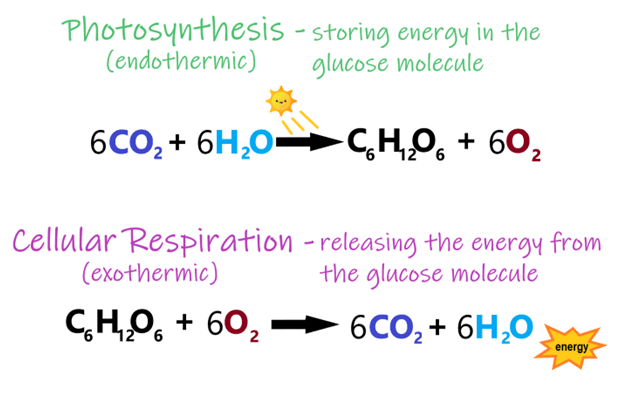
Figure 1: Energy transfer in photosynthesis and cellular respiration
Photosynthesis is the process by which green plants, algae, and some bacteria convert sunlight, carbon dioxide, and water into glucose and oxygen. This process occurs in the chloroplasts of plant cells and involves two main stages: the light-dependent reactions and the light-independent reactions (commonly known as the Calvin cycle). During photosynthesis, solar energy is harnessed and transformed into chemical energy, which is stored in glucose molecules. This energy can be utilized by plants and other organisms that consume it.
II. Energy Utilization in Living Organisms
1. Types of organisms: autotrophs and heterotrophs:
Autotrophs:
Autotrophs are organisms that can produce their own food using inorganic substances and an external energy source, usually sunlight. They are capable of synthesizing organic compounds, such as carbohydrates, through processes like photosynthesis or chemosynthesis. By converting energy from the environment, autotrophs become self-sufficient in terms of nutrition. Examples of autotrophs include green plants, algae, and some bacteria.
Heterotrophs:
Heterotrophs are organisms that cannot produce their own food and rely on external sources to obtain organic compounds and energy. They obtain their nutrition by consuming other living organisms or organic matter. Heterotrophs are further categorized based on their feeding strategies:
Herbivores:
These organisms primarily consume plants or plant-based material.
Carnivores:
Carnivores are organisms that primarily feed on other animals.
Omnivores:
Omnivores have a varied diet and consume both plant and animal matter.
A line:Detritivores:
Detritivores feed on dead and decaying organic material, like detritus and organic debris.
Parasites:
Parasites obtain their nutrition from a host organism, often causing harm to the host in the process.
2. Metabolism:
Metabolism refers to the total of all the chemical reactions occurring within an organism. These reactions involve the conversion of energy and the synthesis and breakdown of molecules. Metabolism can be divided into two main processes:
Anabolism:
Anabolic reactions involve the building of complex molecules from simpler ones. This process requires energy input and is essential for the growth, repair, and maintenance of cells and tissues.
Catabolism:
Catabolism: Catabolic reactions involve the breakdown of complex molecules into simpler ones, releasing energy in the process. This energy is utilized for various cellular activities and the production of ATP.
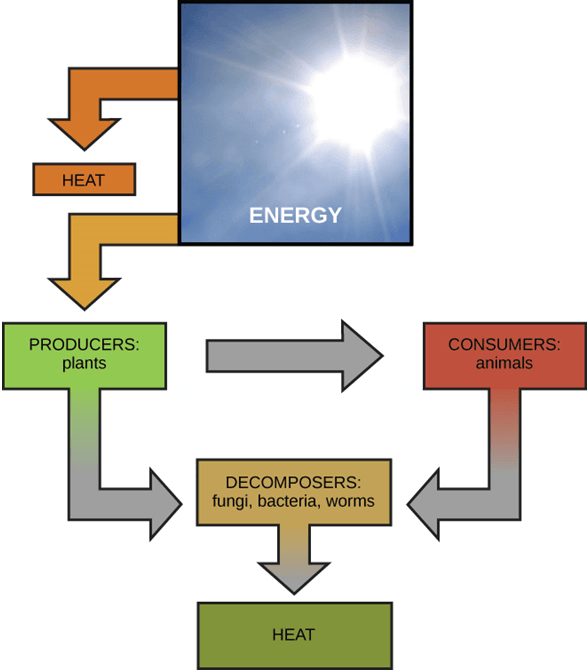
Figure 2: Most energy comes from the Sun, either directly or indirectly. Most life forms on Earth get their energy from the Sun
3. Energy Flow in Food Chains and Food Webs:
Energy moves through ecosystems in a linear fashion via food chains and food webs. In a food chain, energy is transferred from one organism to another as they consume each other. Producers (plants) obtain energy from the Sun through photosynthesis, and herbivores consume these producers. Carnivores then feed on herbivores, and so on. In a food web, the interconnectedness of various food chains results in a complex network of energy transfer.
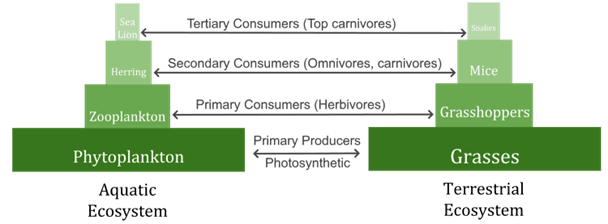
Figure 3: Food chains: Aquatic and terrestrial ecosystems.
4. Energy Efficiency and Trophic Levels:
As energy is transferred from one trophic level to another in a food chain or food web, some energy is lost as heat or used for the organism’s own metabolism. This results in a decrease in available energy at each subsequent trophic level. Consequently, higher trophic levels have fewer individuals, as there is not enough energy to sustain a large population. This energy loss emphasizes the importance of maintaining balanced ecosystems and preserving biodiversity.
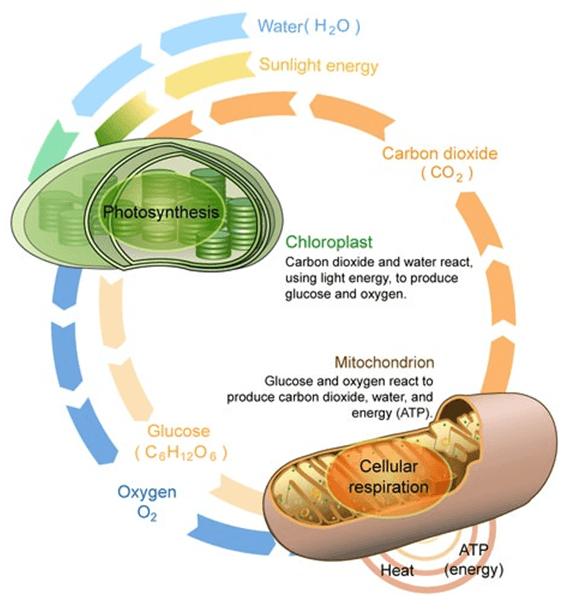
Figure 4: The products of one process are the reactants of the other. Together, the two processes store and release energy in living organisms.
Conclusion
The relationship between energy and life is intertwined and essential for the existence and functioning of living organisms. Energy is acquired from sunlight or organic matter and transformed through processes such as photosynthesis and cellular respiration. The energy is then utilized in metabolic processes, enabling organisms to grow, reproduce, and perform various functions. Understanding the transformation and utilization of energy in living organisms provides us with valuable insights into the intricate workings of the natural world. By recognizing the significance of energy and its flow within ecosystems, we can better appreciate the delicate balance and interconnectedness of all living organisms.